Buy a company off the public record.
It finds the company, reads what every register holds on it, prices it, and carries the deal to the wire — then through the years you own it, to the sale.
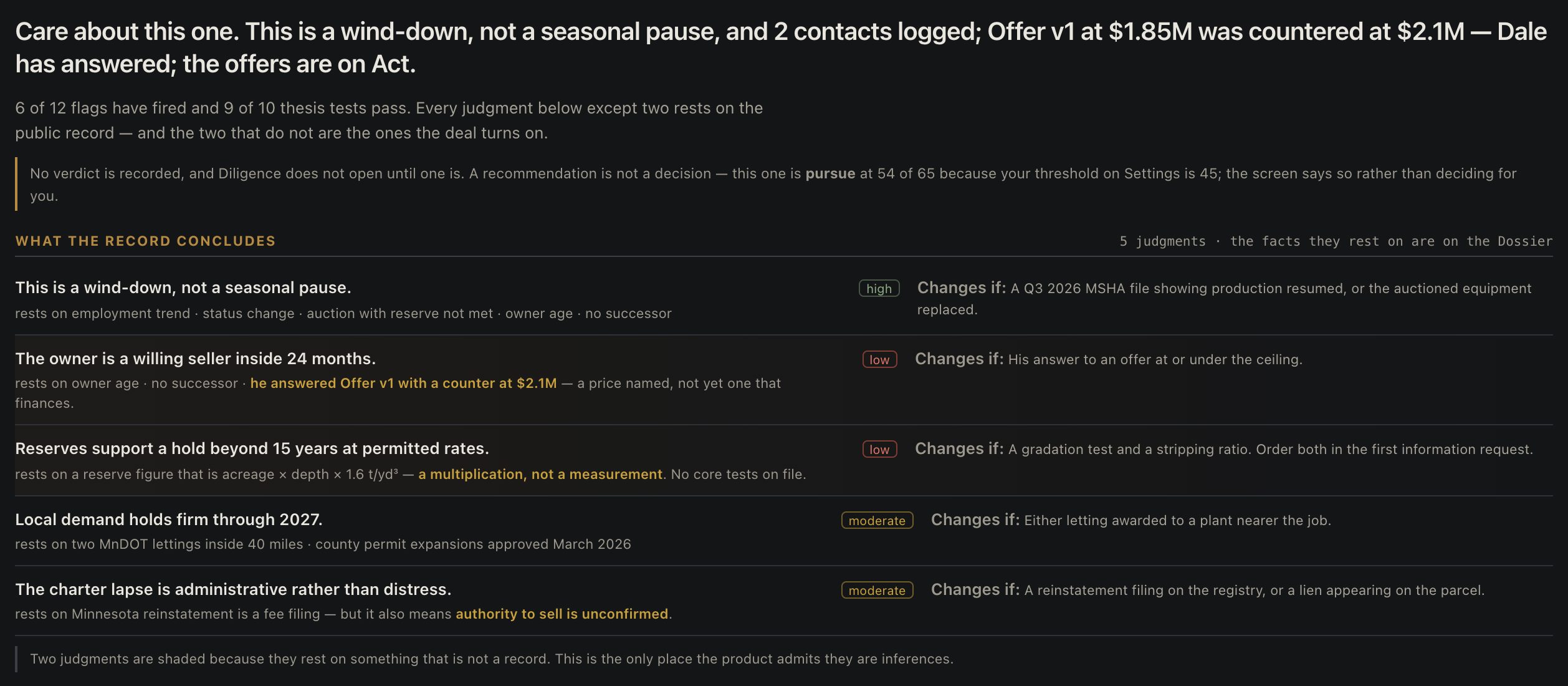
The Brief answers its own question first, then shows every judgment with what it rests on. The two it cannot prove are shaded — the only place the product admits an inference.
It reads a company the way a careful buyer would. Then it shows its working.
Every fact carries its source. What is not on record says so.
The Dossier is the company as the registers hold it — the site, the people, the permits, the liens — each figure with the register it came from and the date it was read.
- Not yet searched and none on record are different facts, and the product never confuses them.
- What the record cannot tell you is listed, with what settles it.
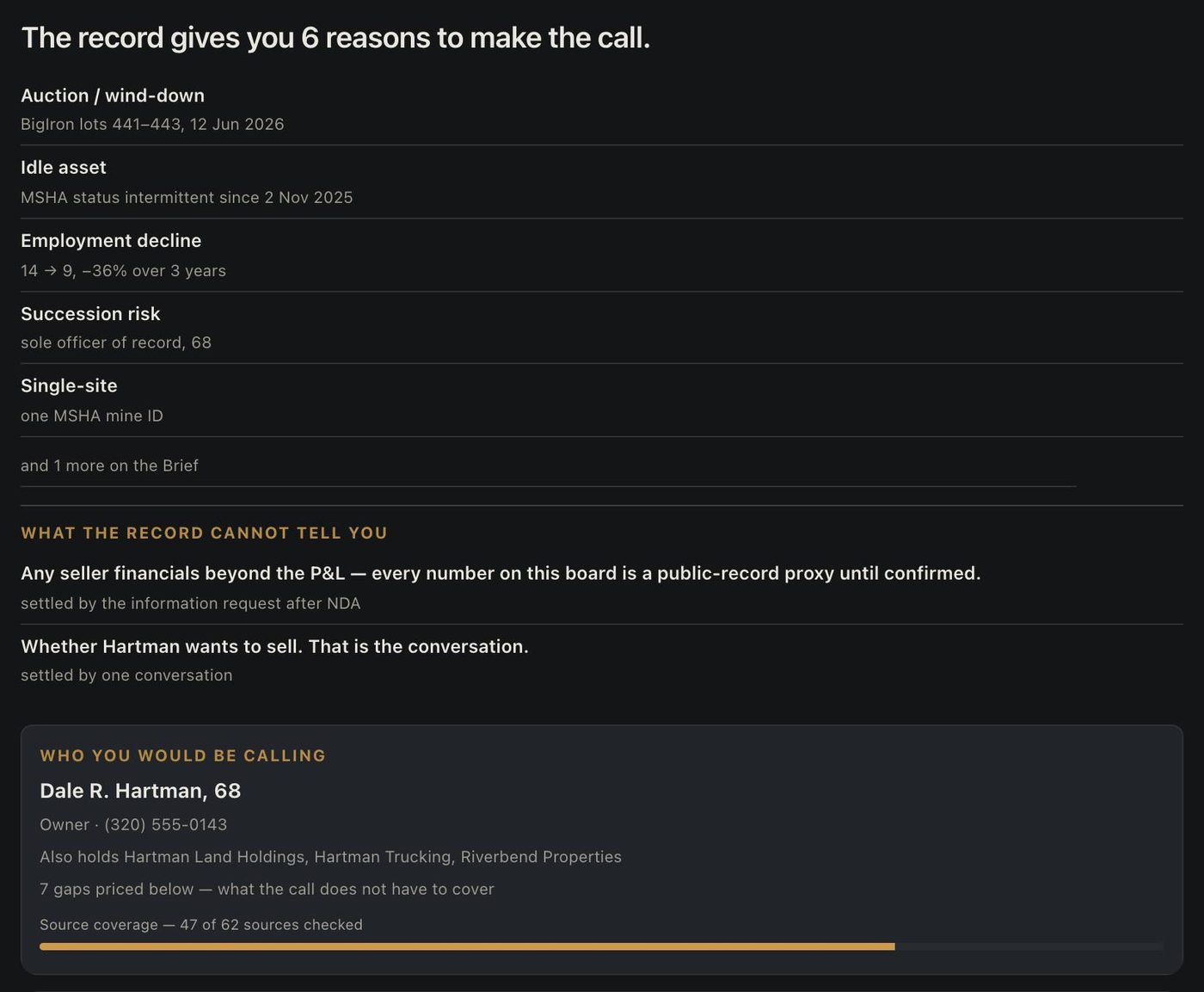
Dossier. The reasons on record, and the two things only a conversation settles.
One model. The number a lender will actually finance.
Underwrite opens with the verdict and the four figures that carry it. Risks prices what it finds, and the price that survives the register becomes the default price on the letter of intent.
- The return, the three statements and every capital stack run off one set of inputs.
- The ceiling is where coverage meets the lender’s minimum — a counter above it is a walk.
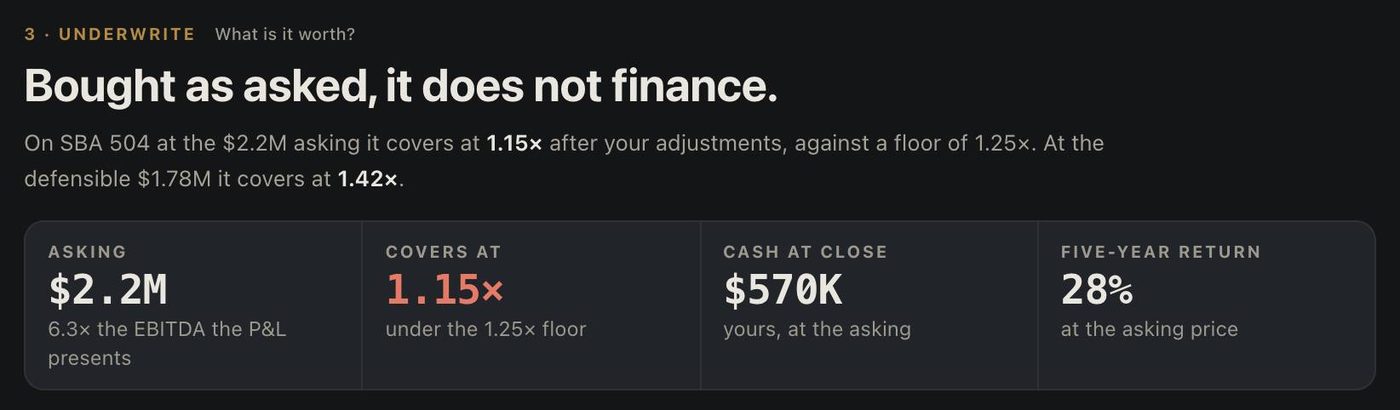
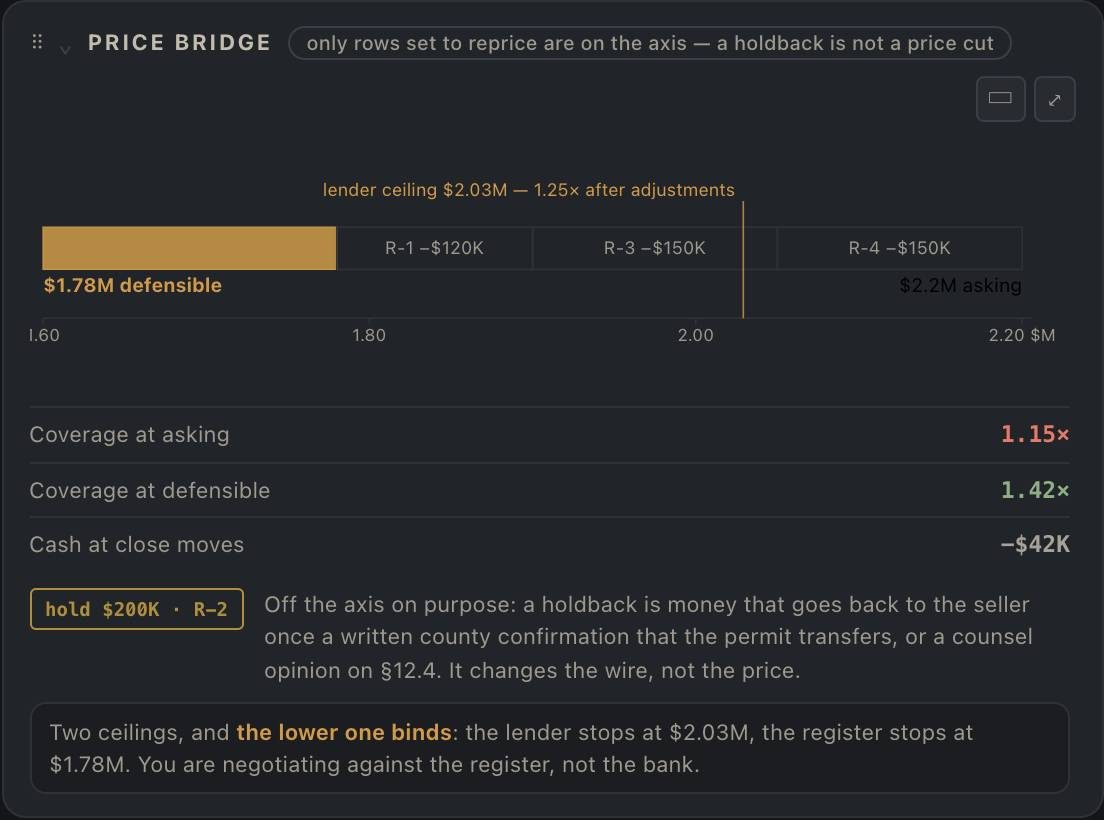
Underwrite and Risks. The verdict in one line; the bridge from asking to defensible on a real axis.
Every offer against your ceiling. Every date against the clock.
The offers ledger keeps each number, the seller’s answer and how far it sits from what finances. Once the letter is signed, the Clock holds exclusivity, diligence, financing and the close date — and re-flows everything when one moves.
- The letter-of-intent ledger seeds the Close ledger; nothing is re-keyed at the handoff.
- Risks become findings; the model becomes the budget.
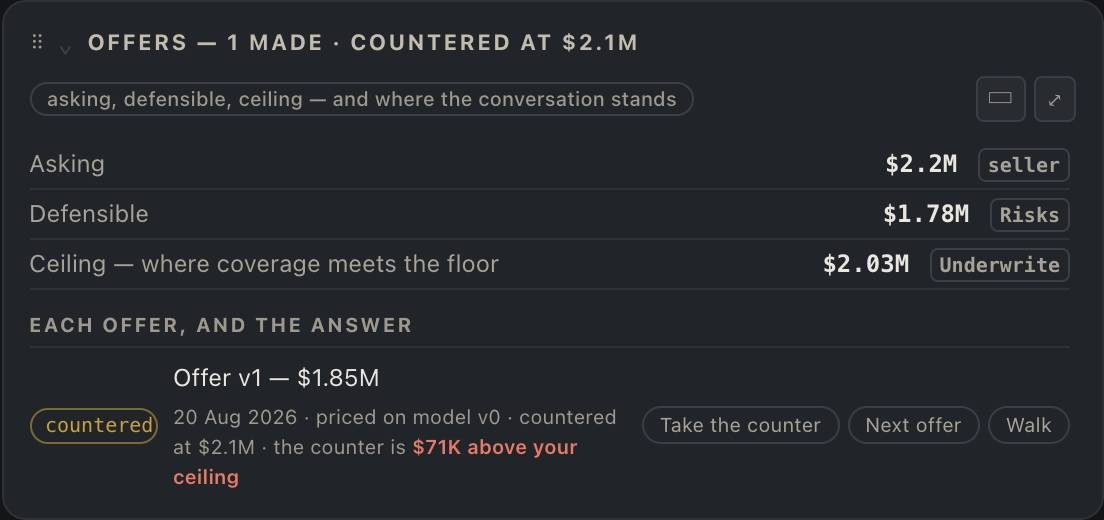
Act. The counter, and how far above the ceiling it sits.
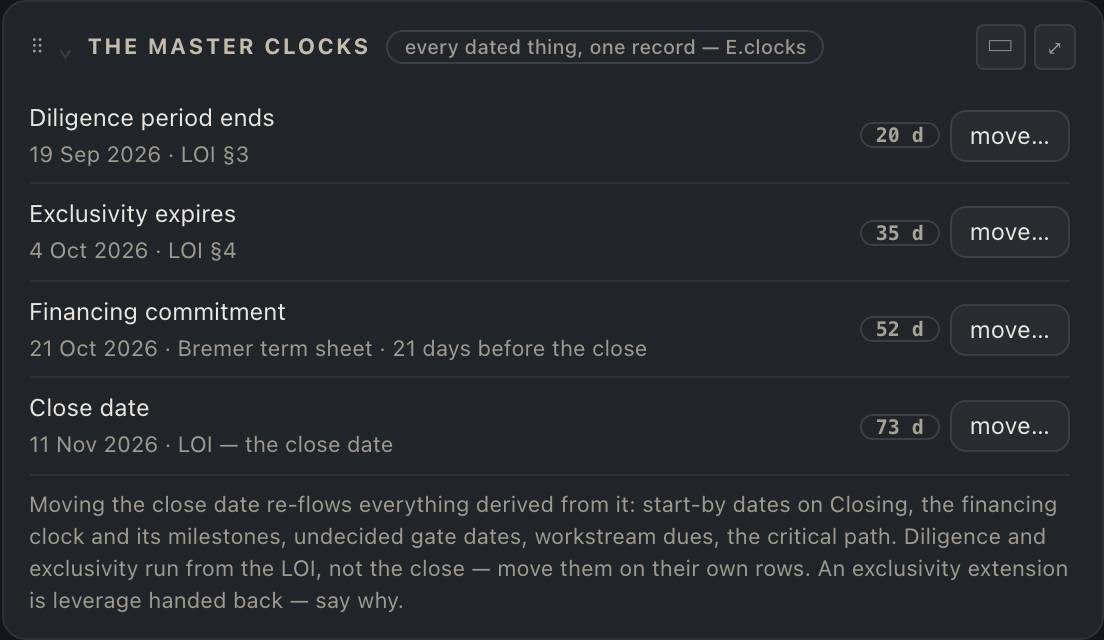
Clock. Four dates, one record.
The software does not make things up. That is the product.
Guess
A number the record does not hold is shown as not on record. An estimate is labelled an estimate and carries its method. An inference is shaded and says so.
Decide for you
The screen recommends at your threshold; the verdict is yours and is recorded as yours. A deal does not move a stage until you move it.
Send anything
No email leaves the product on its own. The script, the letter and the offer are written for you to send, and every draft says attorney review required.
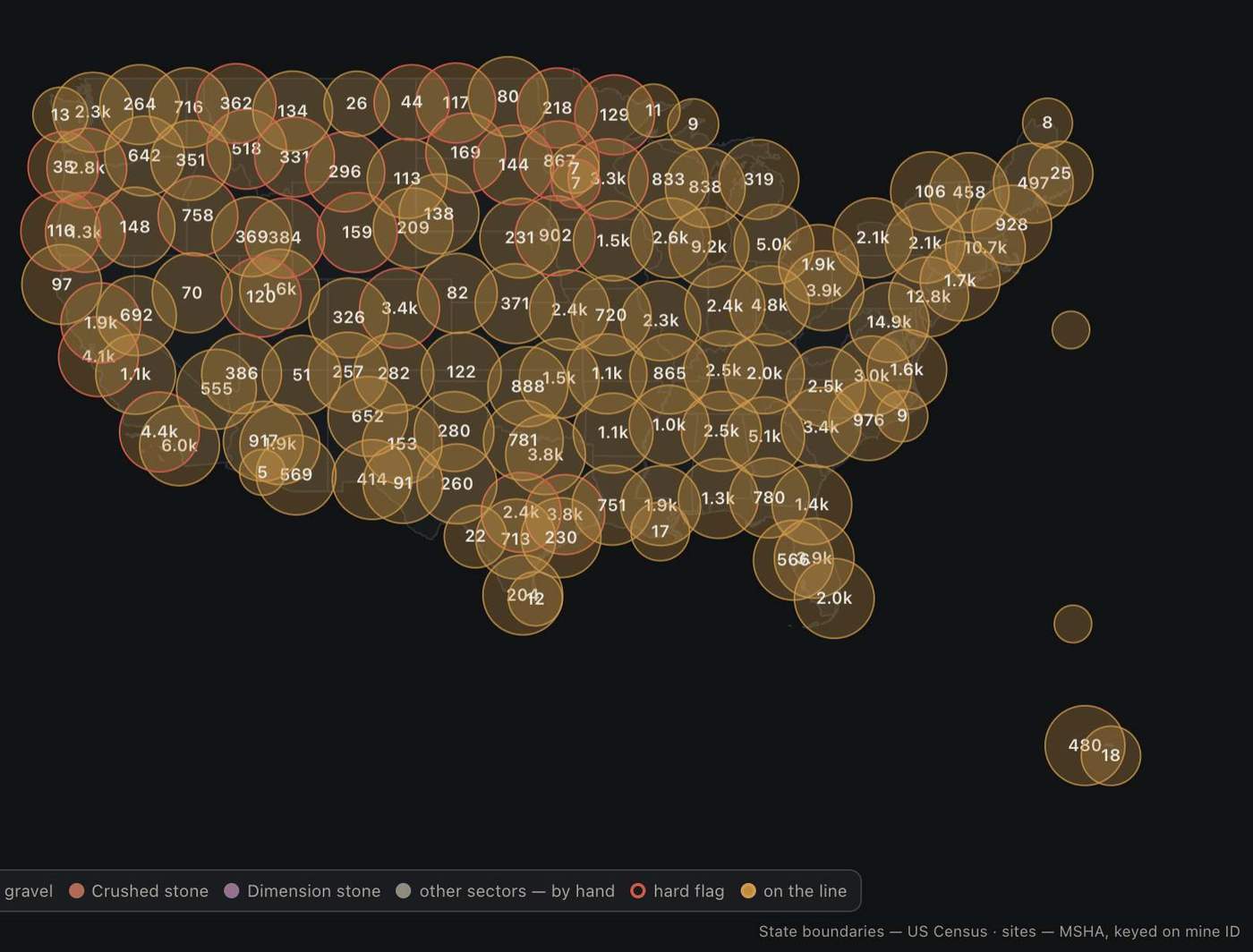
Every site on record, on one map.
A thesis is a saved set of rules — sector, flags, score, size. Watch one, and each time the map recounts it the companies that have entered since are a line in Today. The sector datasets read in full today: Aggregates, Defense & federal contracting, funeral and Manufacturing.
One line, source to exit. Each room answers one question.
A deal is a company moving along a line of rooms. The rooms ahead read as previews; the rooms behind stay readable as the record. Each phase writes its own paper from the deal as it stands.
Source
- Phone script
- Email draft
- Letter — follow-up
- Information request + NDA
- Mutual NDA
- Indication of interest
- Letter of intent
- Seller-note term sheet
- Brief — the read
- IC screening memo
- Royalty and lease outline
- Consulting and transition — outline
- Permit transfer checklist
- Phase I — request for proposal
- Market and thesis report
- Offer of employment
Close
- Purchase agreement — counsel-ready draft
- Term sheet — from the ledger
- Day-one request list — to the seller
- Diligence report
- Gate memo
- Disclosure schedules — from the risk thread
- Funds-flow memorandum
- Closing binder — index
- Closing checklist — to the agreement
- The room — index
- IC final memorandum
- Quality of earnings — summary
- Capital partner — the deal in nine pages
- Status report — by workstream
- Weekly call — agenda
- Investor two-pager
Operate
- The first hundred days
- The budget book
- Valuation mark — memorandum
- Schedule K-1 pack
- Weekly flash
- Board pack
- Covenant compliance certificate
- Investor letter — this company
- Investor letter — the holdings
Exit
- Exit-readiness report
- Teaser — the company unnamed
- Process update — memorandum
- Notice of distribution
- Term sheet — the seller’s side
- Confidential information memorandum
- Management presentation — outline
- Final returns
A field the record cannot fill is written as not on record, never invented. Paper that goes to an owner never names the software.
Every plan is the whole product.
This copy of DealSTE takes new organizations by invitation. If somebody has invited you, use the link they sent. Plans differ in who can sign in, never in which rooms open.
| Plan | Who it is for |
|---|---|
| Trial | The whole product for thirty days. Nothing is switched off and nothing is asked for up front. |
| Solo | One person, one book. The buyer who is doing this themselves. |
| Firm | A small team on one book, with counsel and the lender given their own scoped view. |
| Platform | No seat limit, no guest limit. A holding company running several books at once. |
Buy a company off the public record.
Built for the buyer doing this themselves — the owner-operator on an SBA loan, the self-funded searcher, the independent sponsor, the small holding company.